Computational Chemist & Scientific Software Developer
Pablo
Grobas
Illobre, PhD
I develop computational tools for molecular and materials problems — connecting quantum-chemistry models with performant code and data-driven workflows.
Scroll
Software
Codes and tools.
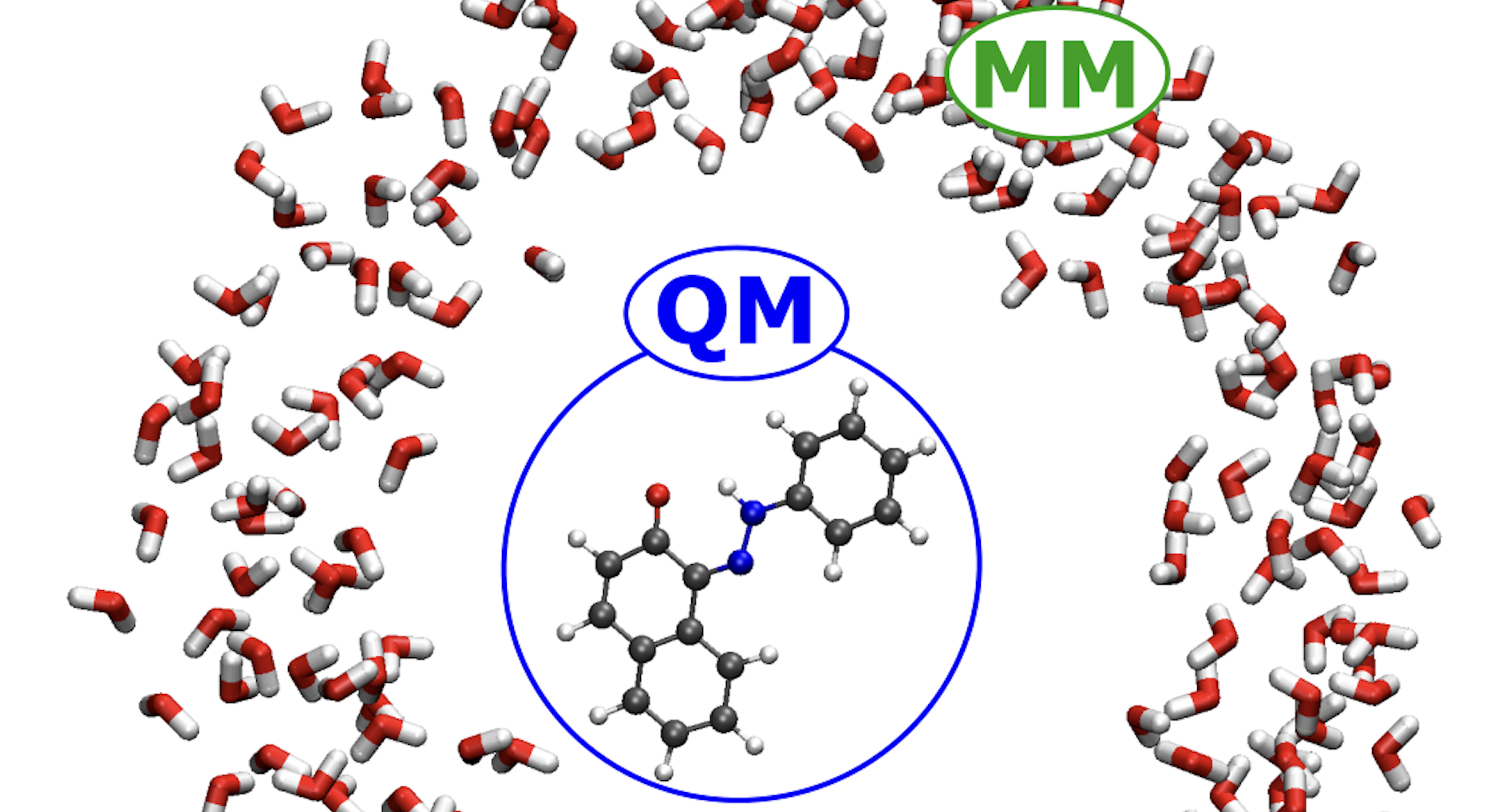
FQSolver
High-performance C++ software to compute electrostatic potentials/fields at solvent sites and solvent charges through the Fluctuating Charges approach.
plasmonX
First public open-source code to model atomistic nanoplasmonics with results comparable to ab initio Time-dependent Density Functional Theory, at a fraction of the computational cost.
Publications
Recent research output.
Small Structures · 2026
Electric Field Enhancements and Hot Spots in Amorphous Carbon Materials
We combine large-scale atomistic amorphous carbon models generated with DynReaxMas and optical simulations based on the ωFQ method to uncover how disorder, curing, and local morphology shape plasmonic hot spots. The approach identifies four recurrent classes of field-enhancement sites—dangling bonds, stacked graphene-like sheets, carbon chains, and atomistic defects—and shows that cured structures can produce stronger and more localized enhancements, with values comparable to defective metallic nanojunctions.
↗
Computer Physics Communications · 2026
plasmonX: an Open-Source Code for Nanoplasmonics
We present plasmonX, an open-source code for simulating the plasmonic response of nanostructures. It combines high-performance implementations of the atomistic frequency-dependent fluctuating charges and dipoles approach (ωFQFμ) and the continuum Boundary Element Method (BEM), enabling accurate modeling of metallic and graphene-based systems and in-depth analysis of their optical properties.
↗
Interested in molecular science, numerical methods, and tools with a
life beyond one project.